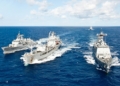

In 2019, the container ship MSC Zoe lost 342 containers north of the Dutch Wadden Islands. Refrigerators, toys and hazardous substances washed ashore on the islands of Terschelling and Vlieland. The environmental damage was considerable, and coastal communities were hit hard. The legal and technical repercussions continued for years.
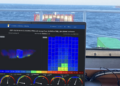
The incident was widely reported as an accident. Michiel Gunsing, co-founder of maritime technology company GBMS, sees it differently. “When the MSC Zoe departed, it complied with all applicable regulations. The vessel had been loaded in accordance with the rules, and the calculations were correct on paper. What no one on board knew precisely was how close the vessel was operating to its safety limits during that severe storm.” Gunsing, a ship hydrodynamics specialist with a PhD in two-phase flow, founded GBMS with Joris Brouwer in 2021. The company developed SensoriumC, a system that calculates the loads on container stacks and lashings in real time. Sensors accurately measure vessel motions, while software combines these measurements with the current loading configuration and checks the results against applicable safety limits. The crew has a continuous, real-time view of the remaining safety margin.
The sea is not static
That sounds straightforward. The underlying challenge is anything but. International maritime safety regulations are generally static: they set conditions for departure, rather than for every minute of the voyage that follows. A vessel leaves port with an approved stowage plan, then heads out into the open ocean and whatever weather it encounters. “Regulations give you a starting point,” says Gunsing. “But the sea does not follow a static model. Waves, wind, vessel motions and loading conditions interact continuously. The question is whether you can monitor those interactions and respond appropriately and in time. With a system like ours, a vessel can be loaded closer to its maximum capacity. That brings safety, environmental and economic benefits.”
The theme of World Maritime Day 2026 is From Policy to Practice: Powering Maritime Excellence. Through this theme, the International Maritime Organization (IMO) emphasises that international regulations only deliver value when they are applied consistently and effectively by all parties involved. For container shipping, this raises a practical question: how do you translate safety standards into actionable information for a captain making decisions in the middle of a severe storm?
Dynamic safety standards
The entire container fleet of Dutch shipping company JR Shipping operates with SensoriumC. The technology is also being rolled out within a major global container shipping line, marking the transition from innovation to an integral part of day-to-day operations.
Gunsing expects technological advances to influence regulation in time. “When you have real-time data on what is actually happening on board a vessel, everyone has access to a different level of insight: the captain, the shipowner, the insurer and the regulator. Regulations that consider only the conditions at departure are then incomplete. In the longer term, the sector will need to consider dynamic safety standards based on measurements taken during the voyage.”